
Is It Rainbow… or Is It White?
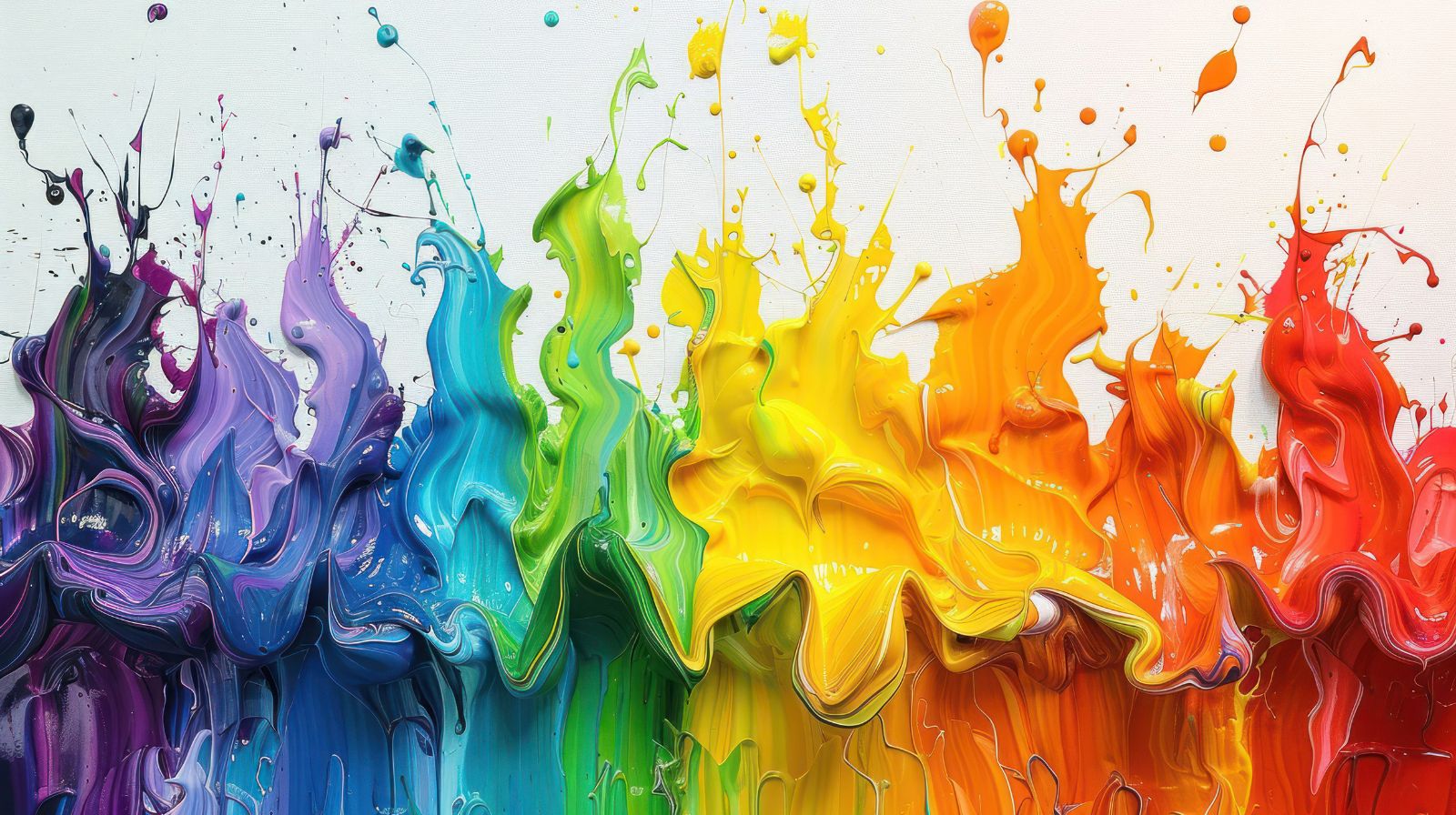
Is It Rainbow… or Is It White?
“What’s your favourite colour?”
I ask this question quite often in my art classes, and I get plenty of different answers. But one answer comes up surprisingly often and always makes me smile.
“Rainbow!”
Now, technically, a rainbow isn’t a colour.
But is it?
The more I thought about that answer, the more I realised there is a rather wonderful story hiding inside those beautiful bands of colour we sometimes see stretching across the sky.
We all know what a rainbow looks like…
Or do we?
Most of us could probably draw one without much thought: an arc across the sky with red, orange, yellow, green, blue, indigo and violet running through it.
But why are the colours in that order? Why are there seven? And what does a rainbow have to do with white light?
To answer some of those questions, we need to go back more than 350 years, to 1665, when a young Isaac Newton was studying at Cambridge University.
The plague had reached London, and Cambridge University closed as the disease spread. Newton returned home to Woolsthorpe in Lincolnshire, where he had plenty of time to think, experiment and investigate the things that fascinated him.
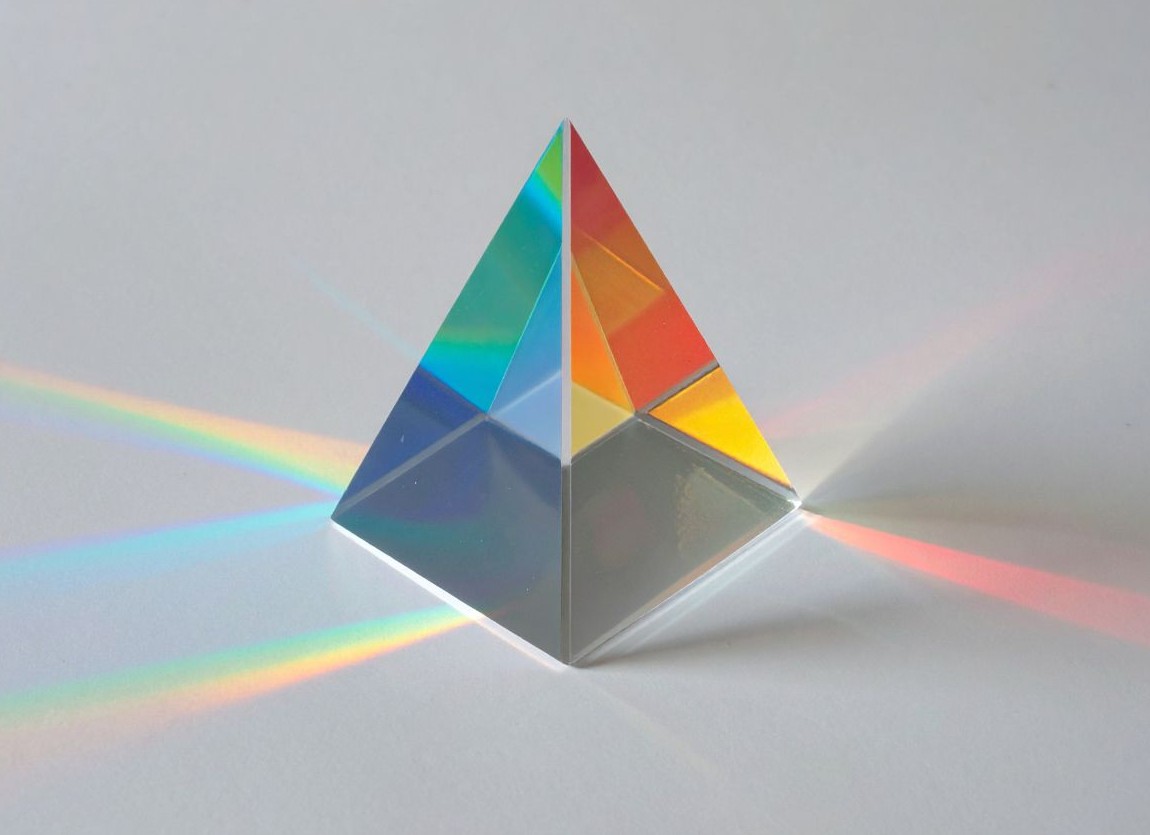
Among the things he had available were two small glass prisms he had previously bought at a fair. People already knew that when sunlight passed through a prism, it could produce a colourful image on a wall. It was a familiar optical effect.
But Newton wanted to know why.
🌈 DID YOU KNOW?
The word “rainbow” is much older than Isaac Newton.
The English word comes from the Old English regnboga, meaning essentially “rain bow.” So people had been giving this beautiful arc a name for hundreds of years before Newton began experimenting with light and prisms.
Newton and the colours of sunlight
Newton directed a beam of sunlight through one of his prisms and watched as the white light spread out into a band of colours.
This wasn’t simply a pretty experiment. He began to suspect that the prism wasn’t creating the colours at all. Instead, the colours were somehow already contained within the white sunlight.
So he tried something else.
He took the separated coloured light and passed it through a second prism, positioned so that the colours were brought back together.
And there it was.
White light.
The colours that had been separated by the first prism had combined again to produce white light.
Newton had found evidence that white light wasn’t simply colourless light. It was made up of the different colours of the visible spectrum.
It was a rather extraordinary discovery.
And it also helped explain what happens when sunlight passes through the tiny water droplets in the air.
We know that effect today as a rainbow.
Why are the colours in that order?
The different colours of visible light have different wavelengths. When sunlight passes through water droplets, those different wavelengths are bent by slightly different amounts.
Red light has the longest wavelength of the visible colours, so it bends the least.
Violet has the shortest wavelength, so it bends the most.
The colours in between fall gradually between them.
That’s why we see the familiar sequence:
Red → Orange → Yellow → Green → Blue → Indigo → Violet
It sounds very orderly.
But there’s something interesting about that list.
A rainbow doesn’t really have seven colours
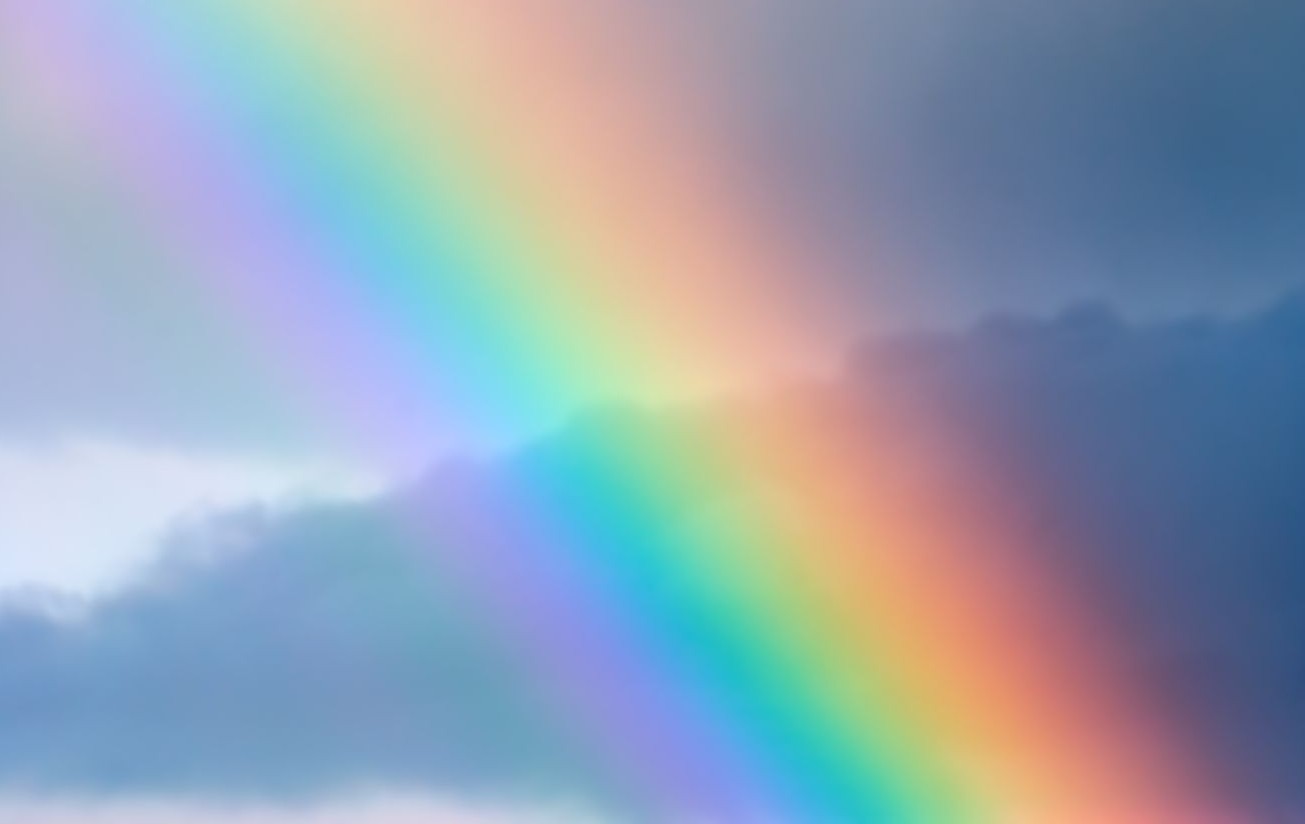
There aren’t actually seven separate strips of colour in a rainbow.
There is no tiny dividing line in the sky where yellow suddenly stops and green begins. The colours gradually blend and transition into one another.
A rainbow is actually a continuous spectrum of light.
We give names to sections of that spectrum because it helps us describe what we see.
And this is why you might look at a rainbow and notice a colour that isn’t on the traditional list.
Maybe you see turquoise between the green and blue. Maybe you notice a pinkish or purplish tone. There are many subtle colours in between the ones we have given names to.
The rainbow doesn’t change because we have only named seven colours.
Our labels simply divide up something that is continuous.
🌈 LOOK CLOSER
A rainbow doesn’t actually have seven separate colours.
The colours flow continuously from one into another. The familiar seven-colour rainbow is simply the way we have chosen to describe and name parts of the spectrum.
So… why seven colours?
This is one of my favourite parts of the story.
Newton identified seven principal colours: red, orange, yellow, green, blue, indigo and violet.
But he could have divided the spectrum differently.
Why seven?
Newton was fascinated by patterns and connections between different parts of the natural world. He saw a relationship between the seven colours of the spectrum and the seven notes of the musical scale.
Seven also had a particular significance in the thinking of the time. There were seven known planets, seven days in the week and many other examples of things being grouped in sevens.
So Newton divided the spectrum into seven principal colours.
And this is where indigo comes in.
Indigo was a relatively new and fashionable blue dye in Europe at the time, imported from India. It was a colour people were becoming very familiar with, and Newton included it between blue and violet.
He could have chosen another colour in that part of the spectrum.
He could have chosen turquoise.
And that makes me smile because I can easily imagine a child looking at a rainbow today and saying, “But where’s the turquoise?”
The truth is, they’re both right.
There are colours in between.
We simply have to decide what we’re going to call them.
So what makes a rainbow so special?
Perhaps it is partly because a rainbow is one of those wonderful things where science and wonder happily exist together.
We can understand what is happening. We can talk about wavelengths, light, water droplets and refraction. We can even recreate parts of the effect with a prism.
And yet, when a rainbow suddenly appears across the sky, most of us don’t stop to think about the physics.
We stop and look.
I certainly do.
Seeing a rainbow makes me smile. There is something hopeful about it. Perhaps it’s because they often appear when sunshine and rain meet, or perhaps it’s simply because they are so unexpectedly beautiful. They feel like a little gift from the sky — something that wasn’t there a moment ago and may disappear just as quickly.
And then there is the storytelling that has surrounded rainbows for centuries.
With my Irish background, I can’t help but think of leprechauns, pots of gold and whatever other bit of mischief might be waiting at the other end.
There is a little bit of fancifulness in a rainbow.
A little bit of playfulness.
And perhaps even a little bit of devilment.
I like that.
Because art is a little bit like that too. We can learn about colour, understand how colours work together and explore all the rules — and then we can have fun breaking a few of them.
My favourite colour?
If you asked me what my favourite colour is, the answer would be definitely blue. Anyone who knows me soon learns that!
But I have to admit, I love all the colours of the rainbow.
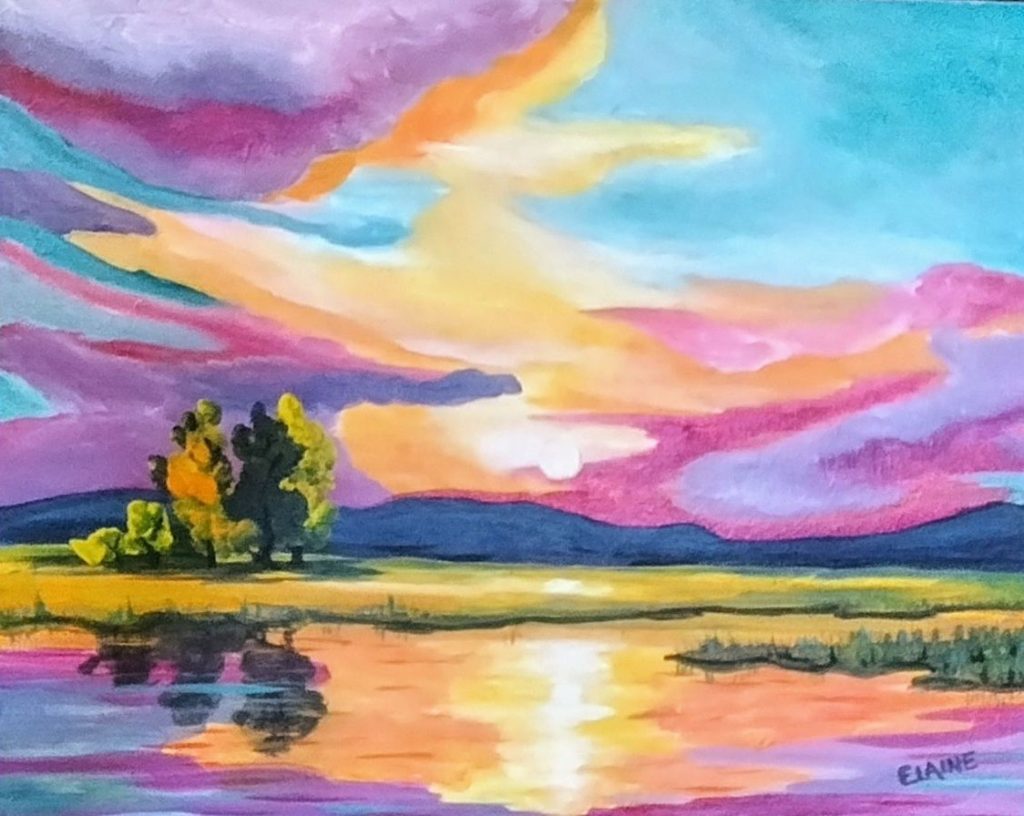
I love bright colours in my artwork. I love seeing the colour combinations children come up with, particularly when they aren’t afraid to experiment. And I love that colour can make us feel something before we have even worked out why.
So when one of my young students tells me their favourite colour is “Rainbow!”, I love it.
Perhaps they’re simply refusing to choose just one.
And maybe that’s why rainbow is a perfectly good answer.
After all, if white light can contain all those colours…
why shouldn’t a favourite colour contain them all too? 🌈
Keep Exploring Creativity
If you loved this, you might also enjoy:
Doodling for Anxiety Relief
How does the simple act of Doodling help with your anxiety?
Want to stay in the loop?
Join my newsletter for class updates, creative inspirations & highlights from my blog.
You can also follow us on Instagram and Facebook to see student artwork, keep up with what’s happening, new classes and the odd art competition!