
Tessellations Art & Maths for Kids
The Magic of Tessellations: Where Art Meets Maths for Kids
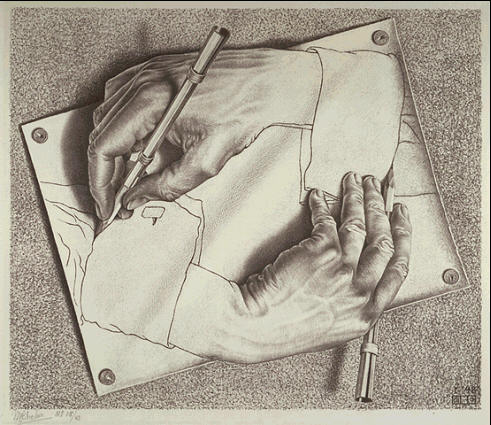
(Image: Drawing Hands by MC Escher – 1948)
Have you ever noticed patterns that repeat perfectly, with no gaps and no overlaps?
Think of bathroom tiles, honeycombs, or even certain fabrics — these are all examples of something called tessellations. While the word might sound complicated, the idea is surprisingly simple… and incredibly fascinating for kids.
What Is a Tessellation?
A tessellation is a pattern made of shapes that fit together perfectly, covering a surface with no gaps and no overlaps.
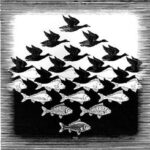
The simplest example?
Squares on a chessboard. But tessellations can be much more creative — transforming into animals, fish, birds, and imaginative designs that seem to “lock” together like a puzzle.
(Image: Sky and Water by MC Escher – 1938)
For children, this is where the magic begins:
- It feels like solving a visual puzzle
- It encourages careful thinking and planning
- It blends creativity with logic
Without even realising it, kids are exploring both art and maths at the same time.
Why Kids Love Tessellations
Tessellations are naturally engaging because they combine structure with creativity.
Kids enjoy:
- Repeating shapes and watching patterns grow
- Experimenting with how pieces fit together
- Turning simple ideas into something complex and beautiful
There’s also something deeply satisfying about creating a pattern that works. That “click” moment — when everything fits — builds confidence and focus.
When Art Meets Maths
Tessellations are a perfect example of how art and maths aren’t separate subjects — they actually work beautifully together.
Through pattern-making, children develop:
- Spatial awareness
- Problem-solving skills
- Attention to detail
- Persistence and patience
At the same time, they’re expressing ideas visually and creatively.
It’s learning… but it feels like play.
Meet M. C. Escher
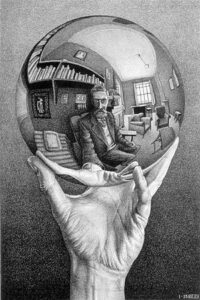 One of the most famous artists to explore tessellations was M. C. Escher.
He created incredible artworks where shapes transformed into animals and interlocking patterns that seemed to go on forever. Some of his drawings even play with perspective — stairs that loop endlessly or worlds that feel impossible!
(L: Image: Hand with Reflecting Sphere by MC Escher – 1935)
What makes his work so appealing to kids is that it feels like a mix of: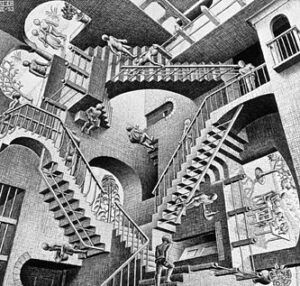
- Art
- Puzzles
- Optical illusions
It sparks curiosity and makes children ask, “How does that work?”
(R: Image: Relativity by MC Escher – 1953)
Bringing Tessellations to Life Through Art
The best way for kids to understand tessellations isn’t just by looking — it’s by creating them.
Hands-on activities like:
- Drawing repeating patterns
- Designing their own interlocking shapes
- Experimenting with paint and collage
- Printing patterns using handmade printing plates
…help children truly grasp the concept while having fun.
And because patterns repeat, kids also experience a calming, almost mindful rhythm as they work.
A Creative Journey This Term
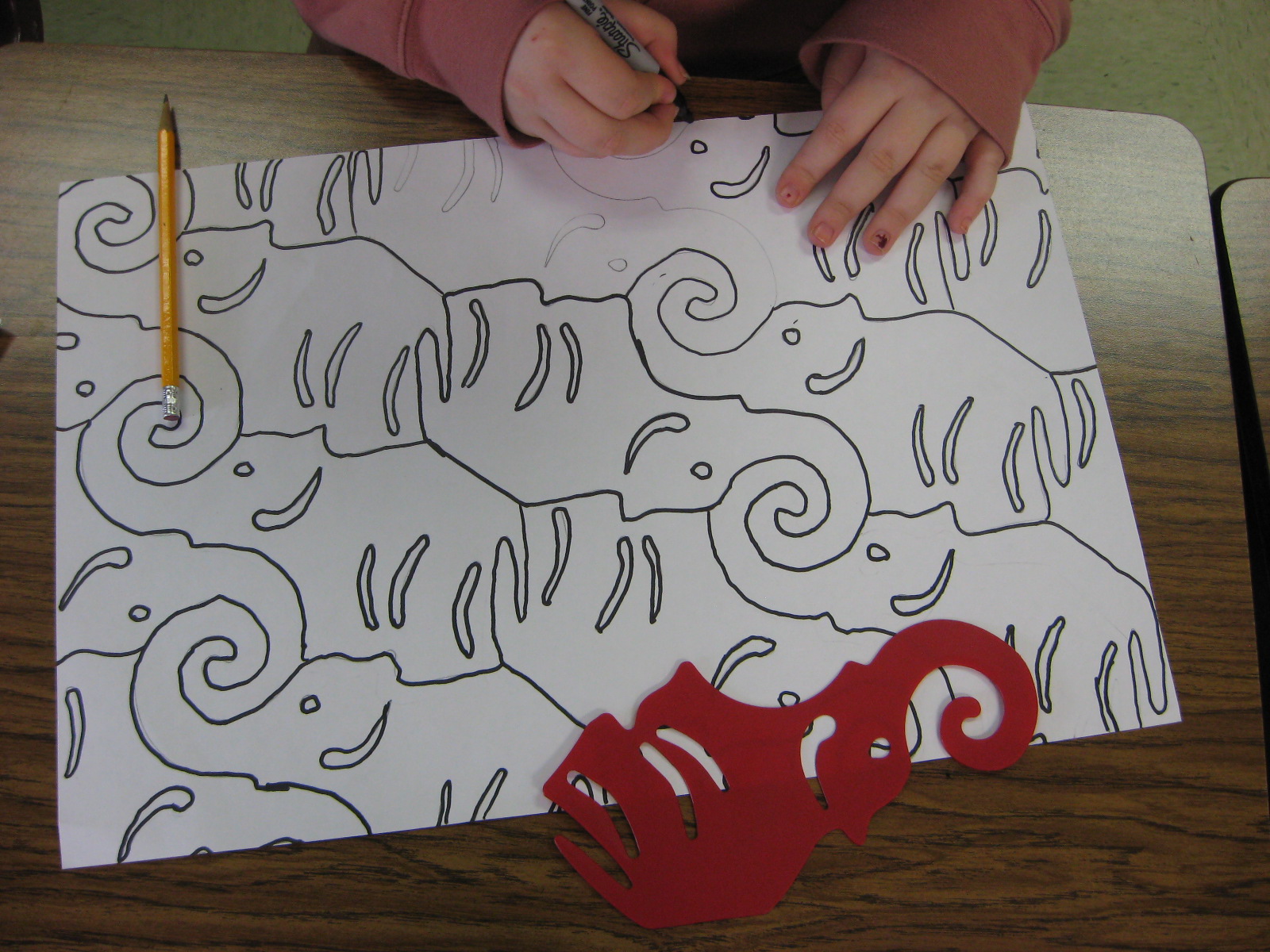
If your child enjoys drawing, puzzles, or creative challenges, tessellation art can be incredibly rewarding.
Your child will explore Escher-inspired art in our Term 2 classes, where we’ll dive into:
- Tessellations and pattern design
- Optical illusion art
- Drawing, painting, and collage techniques
- Creating a clay etched printing plate to produce their own repeating patterns
If you’re looking for ways to nurture your child’s creativity, you can explore more about our Art for Kids classes here.
Final Thought
Tessellations show us that learning doesn’t have to fit into a single box.
When art and maths come together, children don’t just learn — they discover, experiment, and create in ways that feel exciting and meaningful.
And sometimes, all it takes is one repeating shape to open up a whole new way of seeing the world.
” I hover between mathematics and art.” M.C. Escher
Keep Exploring Creativity
If you loved this, you might also enjoy:
Benefits of Online Art for Kids
A look at how screen time can still offer positive benefits if guided properly.
Want to stay in the loop?
Join my newsletter for class updates, creative inspirations & highlights from my blog.
You can also follow us on Instagram and Facebook to see student artwork, keep up with what’s happening, new classes and the odd art competition!