
Child Art Development Stages
From Scribbles to Masterpieces: Letting Children Grow in Art at Their Own Pace
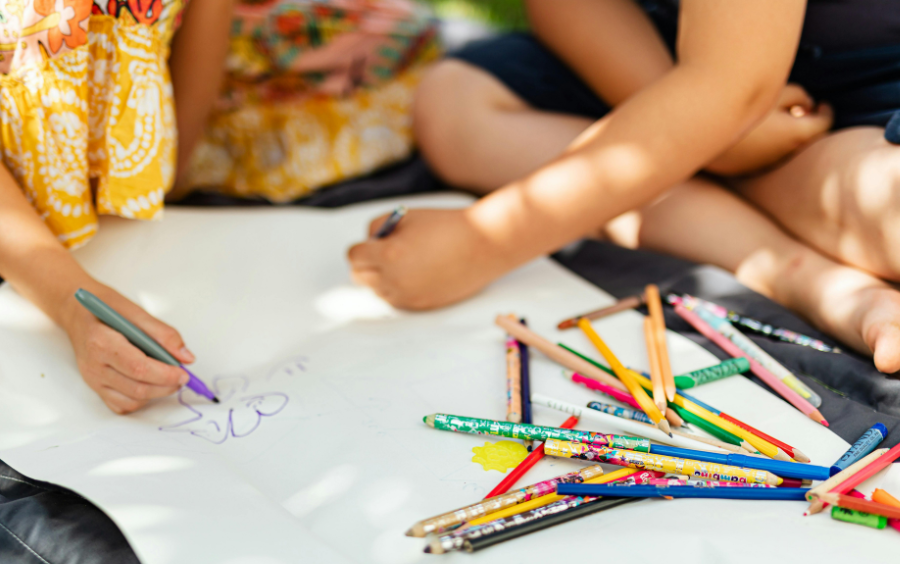
Have you ever looked at your child’s drawing and wondered what it means—or why it looks the way it does?
What might seem like random scribbles or simple stick figures is actually something much more powerful. Every line, shape, and colour choice is part of a child’s development, reflecting how they think, feel, and see the world.
Art isn’t just about creating something “nice.” It’s something that grows alongside your child—quietly building skills, confidence, and understanding over time.
The Scribble Stage (Ages 1–3): Where It All Begins
 At first, drawing is all about movement.
Children in this stage aren’t trying to draw a picture of something—they’re exploring cause and effect. “If I move my hand like this, a line appears!”
These early scribbles:
- Build fine motor skills
- Develop hand-eye coordination
- Lay the foundation for writing later on
You might notice:
- Big, sweeping lines
- Circular motions
- Joy in the physical act of drawing
This stage is less about the outcome and more about the experience. It’s exploration in its purest form.
The Meaning-Making Stage (Ages 3–5): “This Is My Mum!”
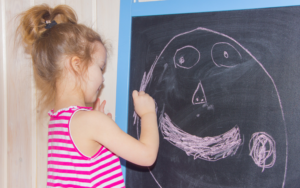 This is when things start to get interesting.
Children begin to assign meaning to their drawings—even if it’s not immediately obvious to adults. A few lines and circles might suddenly become a person, a dog, or a whole story.
You’ll often hear:
- “That’s you!”
- “This is our house!”
- “This is me at the park!”
At this stage, children:
- Start using symbols (like circles for faces)
- Experiment with shapes and placement
- Begin storytelling through art
Their drawings aren’t about realism—they’re about representation.
The Early Representation Stage (Ages 5–7): Building a Visual Language
Now children begin to develop a clearer “visual vocabulary.”
People start to look more like people:
- Heads with bodies
- Arms and legs placed more intentionally
- Facial features appear
You might also notice:
- Objects floating in space (no ground line yet)
- Bright, imaginative colour choices
- Repetition of favourite subjects
At this point, children are gaining confidence. They’re learning how to organise their ideas visually—and it’s an exciting stage to support.
The Awareness Stage (Ages 7–9): “Does This Look Right?”
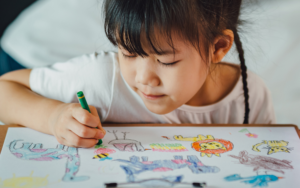 This is a big turning point.
Children become more aware of how things should look. They may start comparing their work to others and can become more critical of their own drawings.
You might hear:
- “I’m not good at drawing.”
- “That doesn’t look real.”
But what’s actually happening is growth.
At this stage, children:
- Begin to notice proportion and detail
- Try to create depth (like ground lines and skies)
- Develop patience and focus
This is where encouragement matters most. Without support, many children stop drawing here—not because they’ve lost interest, but because they’ve lost confidence.
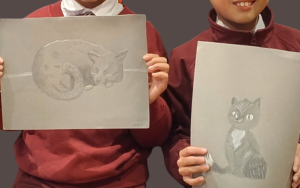
The Later Primary Years (Ages 9–12): Skill Meets Expression
 Now we start to see more intentional artistry.
Children who continue drawing:
- Experiment with shading and perspective
- Add detail and texture
- Develop their own style
Art becomes more than play—it becomes a form of self-expression.
As children move beyond primary years, their artistic development continues to evolve in more specialised ways.
Why This Growth Matters
Art supports far more than creativity.
Across all stages, drawing helps children:
- Build confidence
- Improve focus and patience
- Process emotions
- Develop problem-solving skills
Each stage is important. There’s no need to rush ahead or “fix” their drawings.
A scribble is not less valuable than a detailed artwork—it’s simply part of the process.
Every Child Develops Differently (And That’s Okay)
Developmental stages are helpful—but children don’t move through them in neat age boxes.
Some may spend longer in one stage, while others move quickly through another. A younger child might show advanced detail, while an older child may still enjoy more simple, expressive drawings.
And that’s not a problem—it’s completely normal.
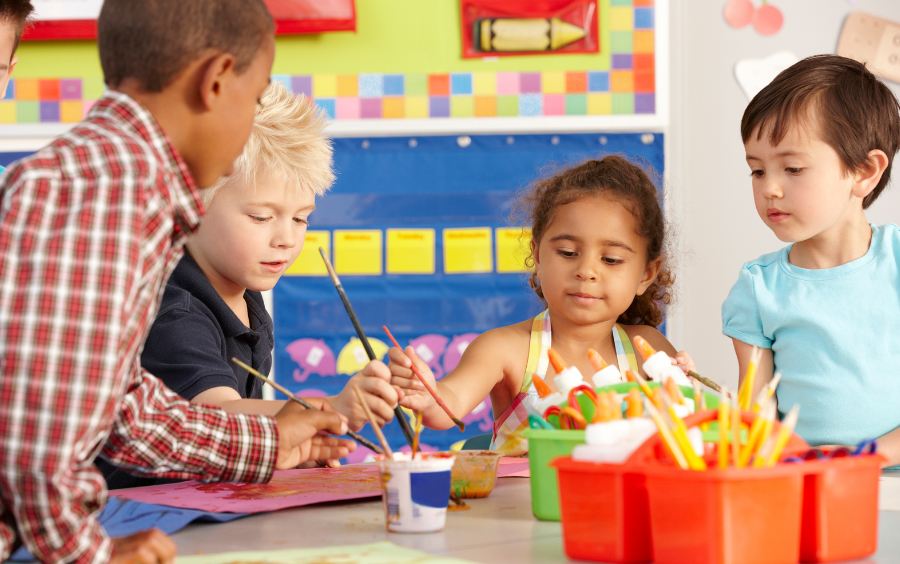
In my Little Artist classes, I work with children aged 5–12 together. This mixed-age environment isn’t accidental—it’s something I’ve chosen very deliberately.
It allows children to learn from each other in a natural way. Younger children are often inspired by what they see, while older children build confidence by sharing ideas and leading in their own quiet way.
Most importantly, it removes the pressure to “keep up” with a set level. Each child is free to grow at their own pace—developing skills, confidence, and creativity in a way that feels right for them.
Because in art, growth isn’t linear—and it shouldn’t have to be.
How You Can Support Your Child
The most powerful thing you can do is simple:
Value the process, not just the result.
Try:
- Asking “Tell me about your drawing” instead of guessing
- Celebrating effort, not perfection
- Providing time and space to create freely
- Avoiding over-correcting or drawing for them
Confidence grows when children feel their ideas matter.
From Scribbles to Masterpieces
Every confident artist starts somewhere.
Those early scribbles? They’re the beginning of something much bigger.
With time, encouragement, and the freedom to explore, children don’t just learn to draw—they learn to think creatively, express themselves, and see the world in new ways.
And that’s the real masterpiece.
Keep Exploring Creativity
If you loved this, you might also enjoy:
The Science Behind Drawing
Ever wondered what part of the brain is developing when your child is drawing?
Want to stay in the loop?
Join my newsletter for class updates, creative inspirations & highlights from my blog.
You can also follow us on Instagram and Facebook to see student artwork, keep up with what’s happening, new classes and the odd art competition!